Semantic Understanding
@admin 5/1/2026 4:22:19 PM
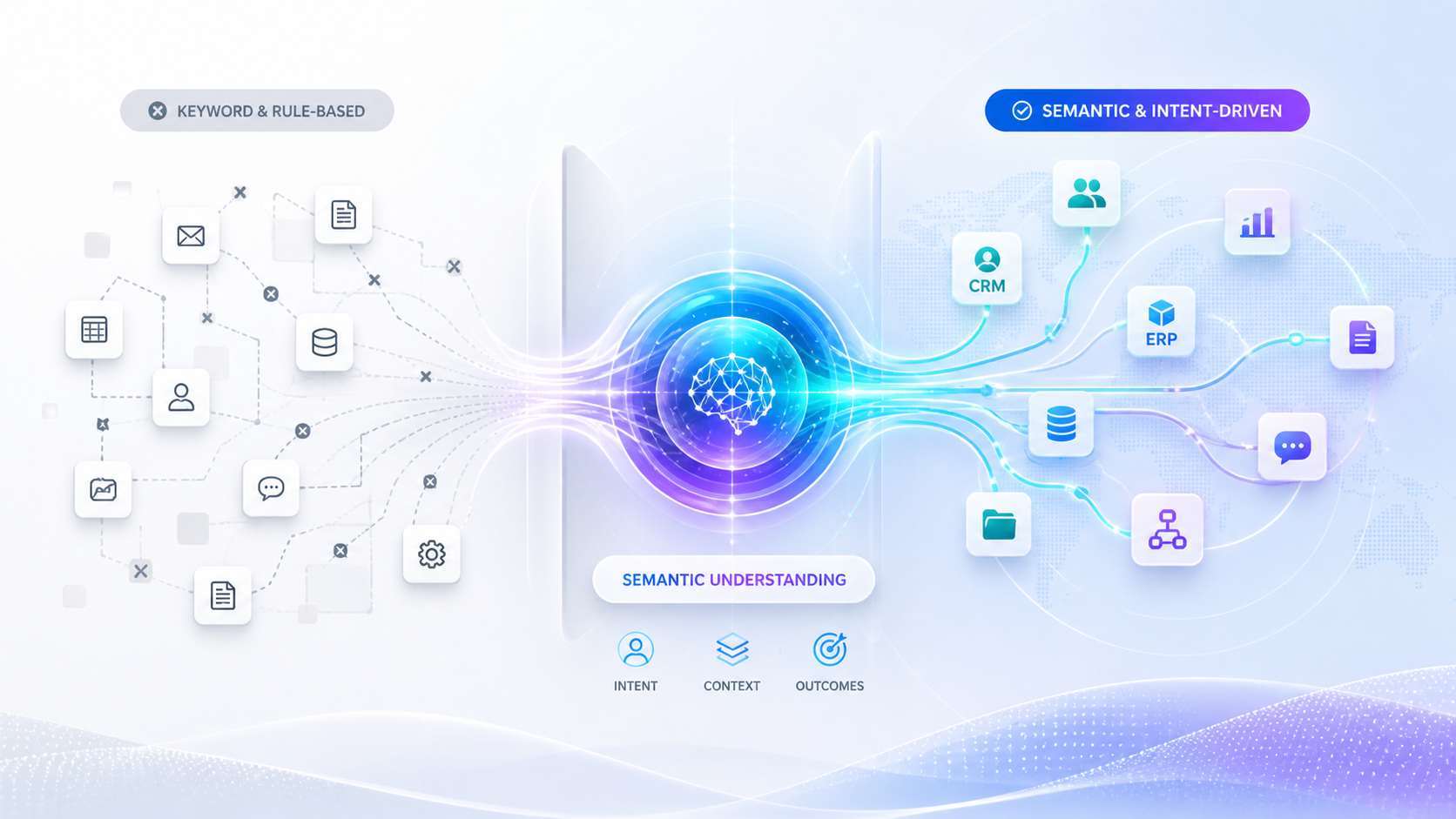
Traditional tool selection methods are reaching their limits in enterprise environments. As tool libraries grow, workflows become more complex, and user expectations rise, semantic understanding is becoming not just an advantage, but a necessity. For years, enterprise software has relied on structured commands, predefined workflows, rigid integrations, and keyword-based matching. These approaches worked well when systems were smaller, use cases were predictable, and users were trained to follow specific processes. But that world is changing. Today, organizations are building ecosystems of APIs, agents, automation tools, internal knowledge bases, SaaS platforms, databases, and specialized business applications. The number of available tools is increasing rapidly. At the same time, users expect systems to understand natural language, business context, intent, permissions, and outcomes. This creates a new challenge: it is no longer enough for software to know what tools exist. It must understand when, why, and how to use them.
The Problem With Traditional Tool Selection
Traditional tool selection is often based on simple patterns: A user says something. The system searches for keywords. A matching tool is selected. The tool is executed. This works for basic tasks. For example:
“Send an email to John.”
A system can match “send email” to an email tool. But enterprise work is rarely that simple. Consider this request:
“Follow up with the customer from last week’s proposal and update the opportunity if they responded positively.”
To complete this properly, the system may need to understand:
- Who “the customer” is
- Which proposal the user means
- Where the proposal is stored
- Whether there was an email response
- What “responded positively” means
- Which CRM opportunity should be updated
- What permissions apply
- Whether the action should be automatic or require approval
A keyword-based tool selector cannot reliably solve this. It may choose the wrong tool, retrieve the wrong record, or execute an action without enough context. That is why semantic understanding matters.
What Semantic Understanding Really Means
Semantic understanding is the ability of a system to interpret meaning, not just words. In an enterprise environment, this means understanding: User intent: What is the user really trying to accomplish? Business context: Which customer, project, process, tenant, department, or workflow does this relate to? Tool purpose: What is each tool designed to do, and what are its limits? Data relationships: How do records, documents, users, transactions, and events connect? Operational constraints: What permissions, policies, approvals, and compliance rules apply? Desired outcome: What result would be considered successful? This changes tool selection from a mechanical routing problem into an intelligent reasoning problem.
From Tool Calling to Tool Orchestration
The next generation of enterprise AI will not simply call tools. It will orchestrate them. A basic AI assistant may call one tool at a time:
Search CRM. Send email. Create ticket.
A semantically aware AI system can coordinate multiple tools across a complete workflow:
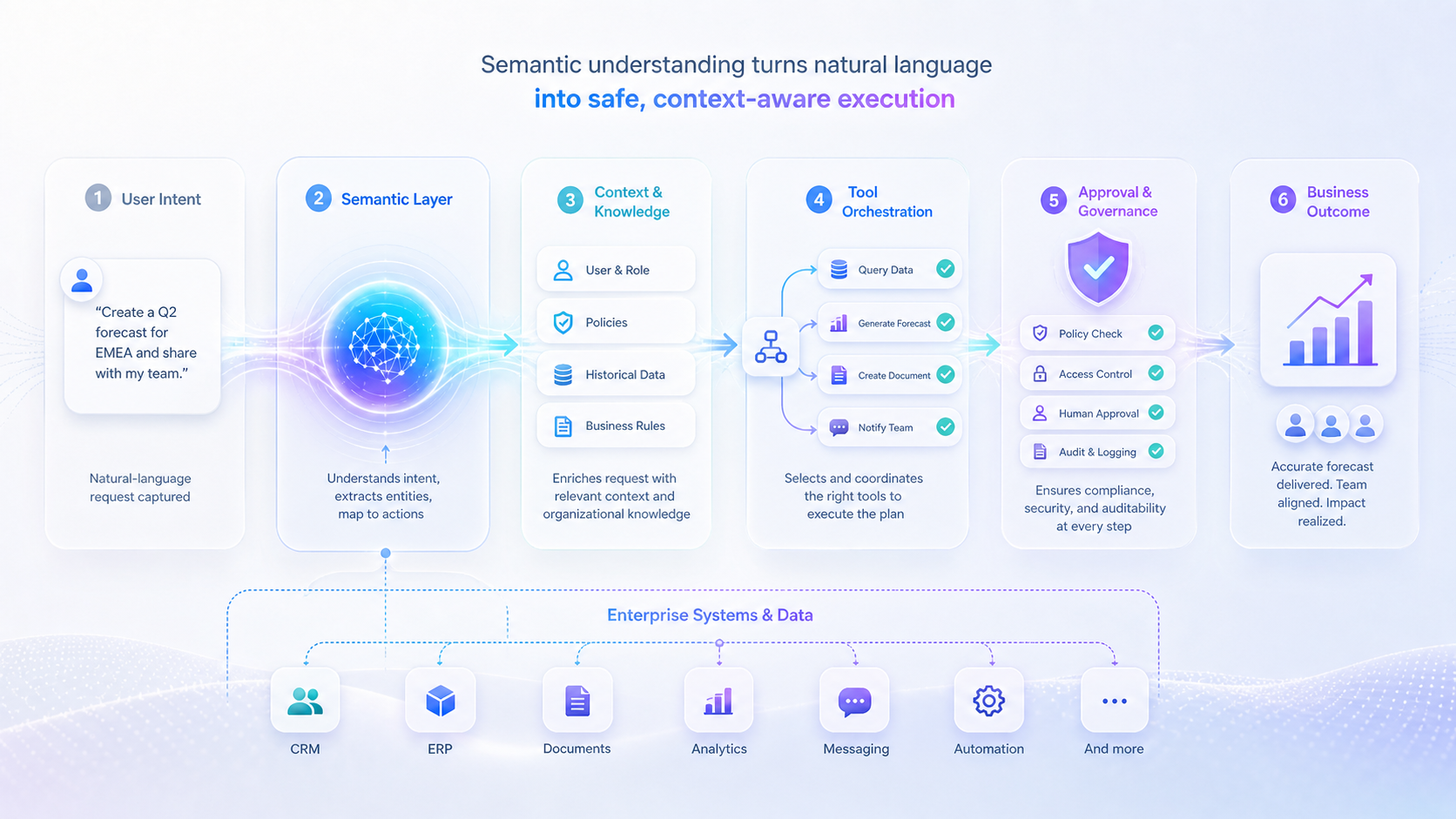
Understand the user’s request. Identify the correct customer. Retrieve relevant emails and CRM records. Summarize the current situation. Recommend the next action. Ask for approval if needed. Execute the update. Log the activity. Notify the right people.
This is where AI becomes truly useful in enterprise operations. The value is not just automation. The value is context-aware execution.
Why Enterprises Need Semantic Tool Selection
As enterprise platforms grow, tool selection becomes harder. A modern organization may have tools for:
- CRM
- ERP
- HR
- finance
- document management
- project management
- customer support
- analytics
- marketing automation
- email and messaging
- identity and access control
- AI agents and workflows
In this environment, users should not need to know which system owns which process. They should be able to express what they want in natural language, and the AI layer should understand the operational path. For example:
“Prepare a renewal summary for this client.”
A semantically aware system would know that this may involve CRM data, contract history, invoices, support tickets, product usage, previous meetings, and risk indicators. The user does not want a tool. The user wants an outcome. That is the key shift.
The Rise of Semantic Infrastructure
To support this future, enterprises will need more than isolated APIs. They will need semantic infrastructure. This may include:
- Rich metadata around tools and APIs
- Business-aware knowledge graphs
- Domain-specific ontologies
- Agent instructions and operating boundaries
- Permission-aware retrieval
- Context memory
- Workflow intent models
- Human approval checkpoints
- Evaluation and audit trails
In other words, the enterprise AI layer must understand the business environment in which it operates. The winning systems will not be the ones with the most tools. They will be the ones that understand the tools best.
Semantic Understanding Improves Trust
One of the biggest barriers to enterprise AI adoption is trust. Users do not want AI systems that randomly choose tools, hallucinate actions, or make unsupported assumptions. They need systems that can explain:
- Why a tool was selected
- What information was used
- What action is being proposed
- What risks exist
- What will happen next
- Whether human approval is required
Semantic understanding helps create that trust. When AI understands context, intent, and constraints, it can act more safely and transparently. It becomes less like a chatbot and more like an intelligent operational partner.
The Future: Intent-Driven Enterprise Systems
The future of enterprise software will be increasingly intent-driven. Instead of forcing users to navigate complex menus, dashboards, and disconnected tools, AI systems will interpret goals and coordinate execution. A sales manager may say:
“Show me which deals are at risk this quarter and suggest next actions.”
An operations leader may say:
“Find the bottlenecks in our onboarding process.”
A finance manager may say:
“Explain why this customer’s invoice cycle is delayed.”
A customer success team may say:
“Prepare a recovery plan for accounts with declining engagement.”
In each case, the AI system must understand the business meaning behind the request. It must know which tools to use, which data to retrieve, which actions are safe, and which decisions require people. This is not just tool calling. This is semantic execution.
Conclusion
Semantic understanding is the future because enterprise work is not built around isolated commands. It is built around meaning, context, relationships, and outcomes. Traditional tool selection methods are reaching their limits. Keyword matching, static routing, and rigid workflows cannot keep up with the complexity of modern enterprise environments. The next generation of enterprise AI will require systems that understand intent, interpret context, select tools intelligently, and orchestrate workflows safely. In the age of AI agents, the real competitive advantage will not come from simply having more tools. It will come from building systems that understand what those tools mean, when to use them, and how to turn user intent into trusted business outcomes.
Last Modification : 5/1/2026 4:24:37 PM